
 English
 Español
 日本語
 Deutsch
 Pусский
 Français
 Portugues
 العربية
 ไทย
 Bahasa indonesia
 עברית
As electronic assemblies become more compact and complex, consistent PCBA inspection is increasingly important. For manufacturers, identifying assembly defects is only part of the challenge. Reliable inspection decisions, controlled rework and continuous process improvement are equally important.
At DAMAVO®, our SMT workshop uses AI-assisted AOI inspection as part of the PCBA production flow. By connecting inspection results with rework, program validation and quality feedback, we aim to strengthen inspection consistency and improve process control.
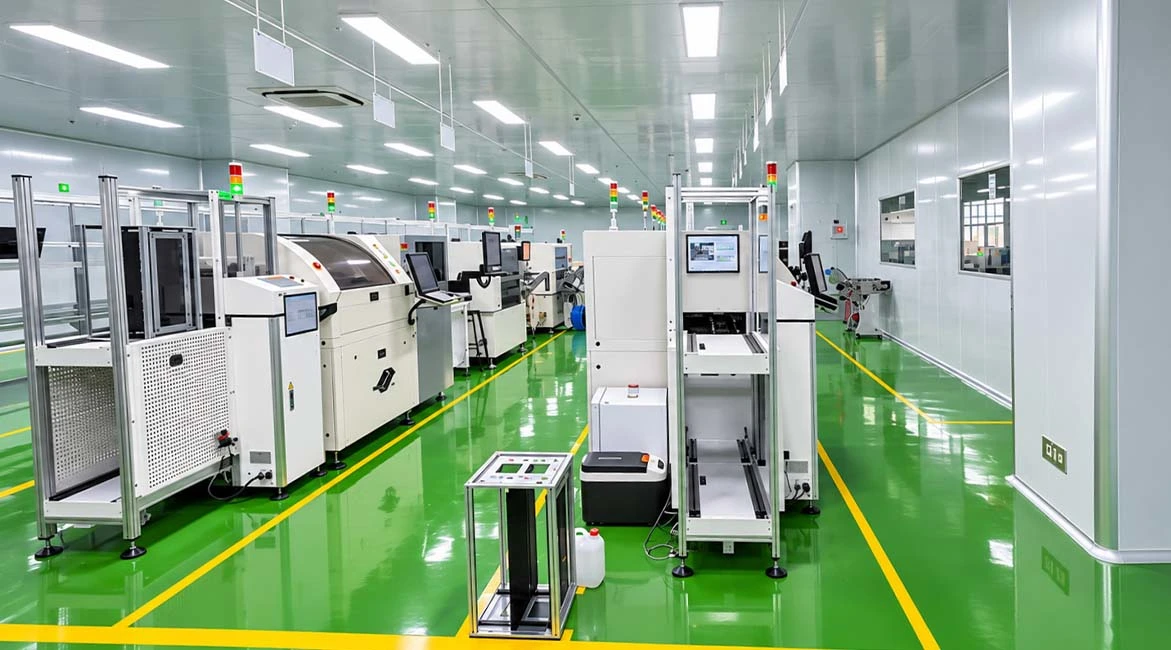
In this article, we explain how AI-assisted AOI inspection works in our production process and why it matters for OEM and PCBA projects.
In this article:
- What AOI does in PCBA manufacturing
- How AI-assisted AOI supports defect recognition
- How our inspection process moves from Pass/NG results to rework
- How we verify inspection programs and control false calls
- What this means for OEM and customized PCBA projects
1. Why PCBA Manufacturing Needs Reliable Inspection
Even when PCB designs and electronic components meet specifications, assembly defects can still occur during SMT production. These issues may affect electrical performance, product stability and long-term reliability.
Common assembly problems include missing components, placement offset, incorrect polarity and soldering abnormalities.
For automotive electronics, industrial equipment and power control products, these issues can create additional testing, repair and after-sales costs. A reliable inspection process helps manufacturers identify potential problems before boards move further through production.
2. What Does AOI Do in PCBA Manufacturing?
AOI stands for Automated Optical Inspection. It uses industrial cameras, optical imaging and image-processing software to examine PCB assemblies and identify visible defects.
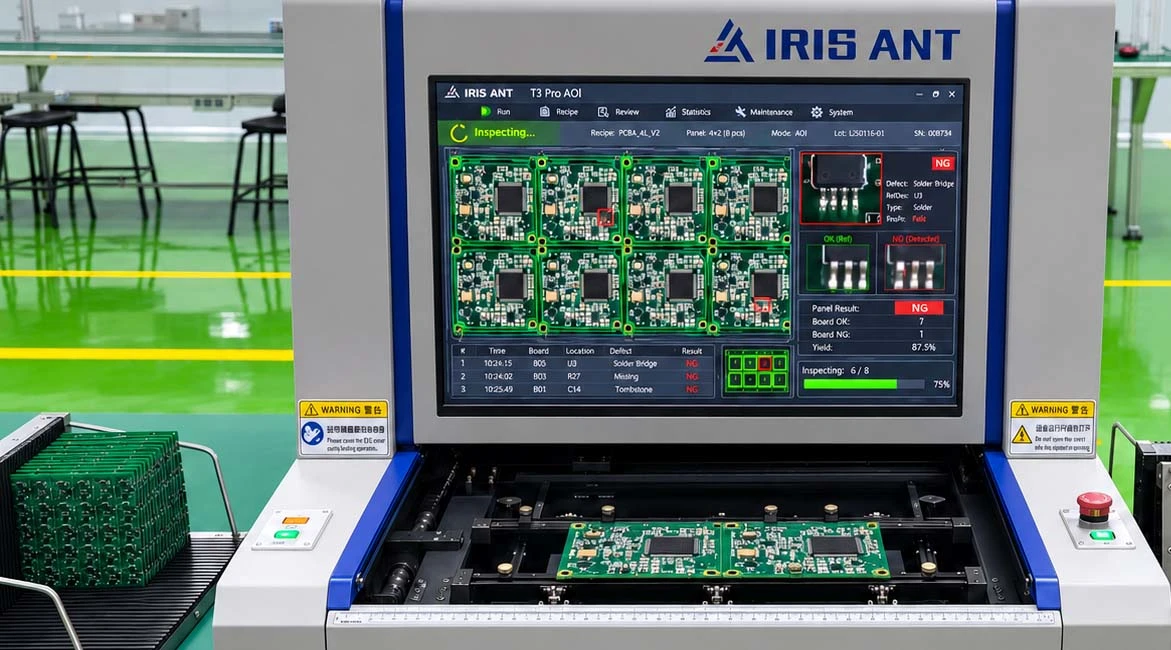
In SMT production, AOI systems capture board images and evaluate them against configured inspection criteria.
Typical AOI inspection items include:
- Missing components: Identifying empty component positions.
- Component misalignment: Detecting incorrect placement or visible offset.
- Incorrect polarity: Checking the orientation of polarity-sensitive components.
- Solder bridging: Identifying visible solder connections between adjacent pads.
- Soldering abnormalities: Detecting certain visible soldering issues.
AOI helps improve inspection efficiency compared with manual visual checks alone. However, its performance depends on camera resolution, lighting conditions, inspection programs and component characteristics.
It is also important to understand that standard optical inspection cannot directly verify every hidden solder joint. Applications such as BGA inspection may require additional methods, including X-ray inspection.
3. How AI-Assisted AOI Improves PCBA Quality Inspection
Traditional AOI systems mainly use programmed inspection rules, image comparison and predefined thresholds to identify potential defects. AI-assisted AOI adds machine learning or AI-based image analysis to support defect recognition and classification.
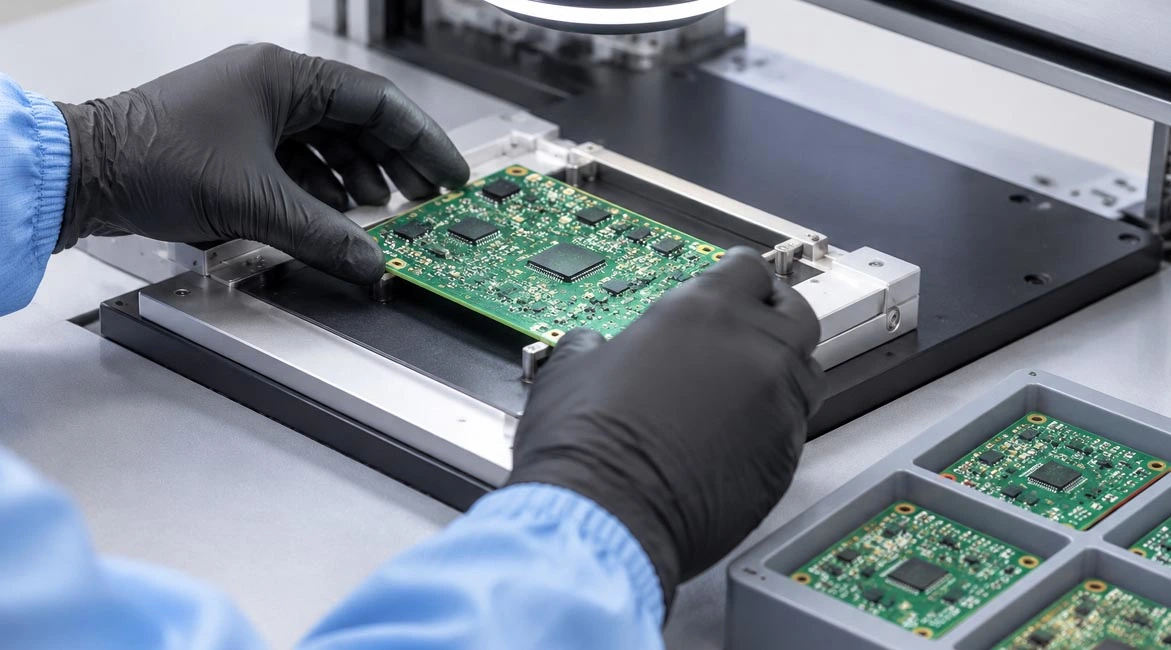
At DAMAVO®, AI-assisted AOI inspection supports PCBA quality inspection and SMT quality control through several functions.
AI-Assisted Defect Recognition
AI-based image analysis can help identify visual differences and abnormal features in PCB assemblies, supporting the recognition of component and soldering issues.
Defect Classification
Inspection results can be classified by defect type, helping production teams understand the nature of reported issues and organize corrective actions.
Inspection Feedback
Defect and rework records provide useful information for engineers to review recurring problems and identify possible process improvements.
Traditional AOI vs. AI-Assisted AOI
| Comparison | Traditional AOI | AI-Assisted AOI |
| Inspection basis | Programmed rules and image comparison | AI-supported image analysis combined with inspection rules |
| Defect recognition | Predefined inspection criteria | Additional support for recognizing complex visual patterns |
| Defect classification | Rule-based classification | AI-assisted classification where supported |
| Inspection improvement | Program adjustments and engineering feedback | Additional data analysis and feedback support |
AI is a supporting technology, not a replacement for engineering judgment. Actual inspection capabilities depend on the equipment, software, training data and application requirements.
4. How Our AI-AOI Process Works: From Inspection to Rework
An effective inspection process needs more than a detection result. It must also define what happens when a board passes inspection or receives an NG result.
In DAMAVO's SMT workshop, AI-assisted AOI inspection is positioned after reflow soldering. The system evaluates each board based on its configured inspection program and generates a Pass or NG result.
Our inspection flow:
1. AOI Inspection
The assembled PCB passes through the AOI system, where cameras capture images and the inspection program evaluates visible assembly features.
2. Pass Result
Boards that pass inspection move to the next production step.
3. NG Result
Boards receiving an NG result are routed directly to the rework station for further examination and corrective action.
4. Rework and Verification
Operators and engineers handle reported issues, verify inspection programs when necessary and perform the required rework.
5. Re-inspection
Reworked boards undergo AOI inspection again before returning to the production flow.
We do not perform a separate manual image-by-image review before routing NG boards. Instead, human attention is focused on rework, program verification and exception handling.
This approach helps simplify the inspection-to-rework process while making inspection program stability an important part of quality management.
DAMAVO’s in-house SMT production supports tighter quality control from PCB assembly through final integration. For a closer look at this integrated manufacturing setup, see our in-house SMT production overview.
5. How We Verify Inspection Programs and Control False Calls
When AOI results directly determine the next production step, inspection program reliability becomes especially important.
At DAMAVO®, inspection control focuses on several areas:
- Program validation: New inspection programs are checked using golden samples, representative known-defect samples and first-article confirmation before production.
- Inspection verification: Known samples are used to check whether the program continues to identify expected defects.
- False-call monitoring: Overkill and escape trends are tracked, with program adjustments made when necessary.
- Rework data analysis: Rework records are grouped by defect type and reviewed for potential issues in printing, component placement and reflow soldering.
- Downstream testing: Electrical testing, functional testing and sampling remain separate inspection steps when required by the project.
- Traceability: AOI results and rework records are retained to support quality review.
There is an important balance between inspection speed and detection reliability. Excessive false calls can create unnecessary rework, while missed defects may increase downstream quality risks.
For this reason, inspection programs need regular verification and engineering attention throughout production.
6. SPI and AOI: Different Roles in SMT Quality Control
SPI and AOI are two important inspection technologies used at different stages of SMT manufacturing. Understanding their roles helps explain how PCBA quality inspection covers both solder paste printing and assembled boards.
| Inspection Method | Production Stage | Main Inspection Purpose |
| SPI | After solder paste printing | Checks solder paste position, height and volume |
| AOI | After reflow soldering | Checks visible component placement and soldering features |
SPI helps identify printing problems before component placement. AOI examines visible assembly conditions after soldering.
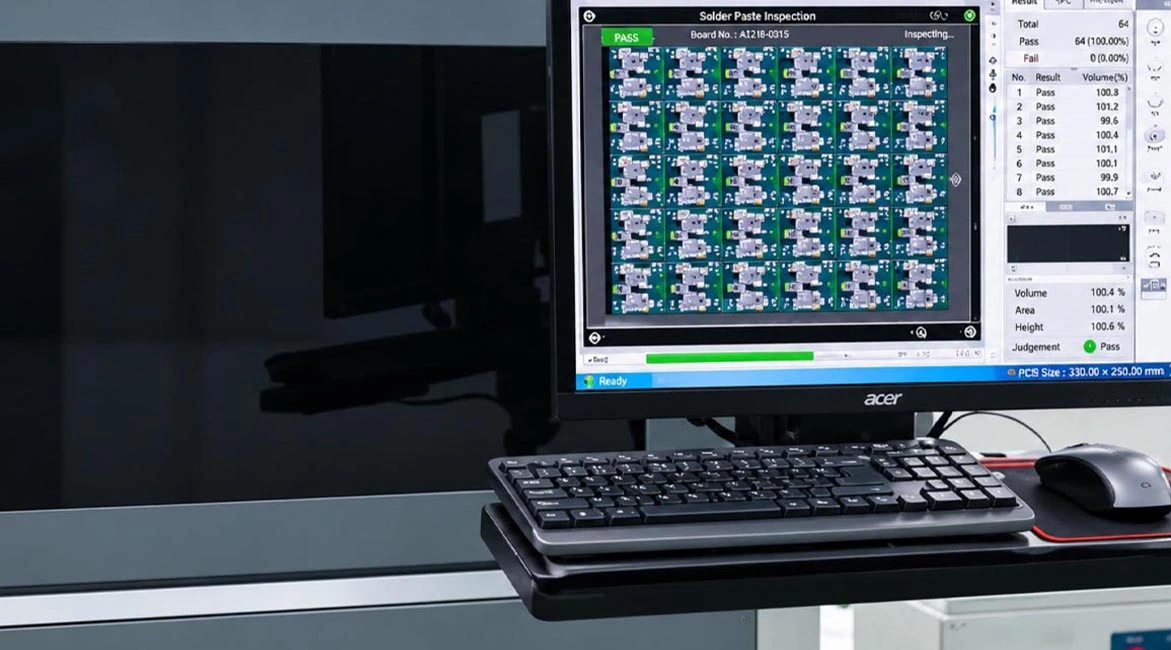
Together, these inspection methods support a more complete SMT quality control process. However, they do not replace electrical testing, functional testing or other verification methods required by the product.
7. What AI-Assisted AOI Means for OEM and PCBA Projects
For OEM customers, inspection capability is an important part of supplier evaluation. A well-managed inspection process can support more consistent production, faster issue feedback and better visibility into manufacturing quality.
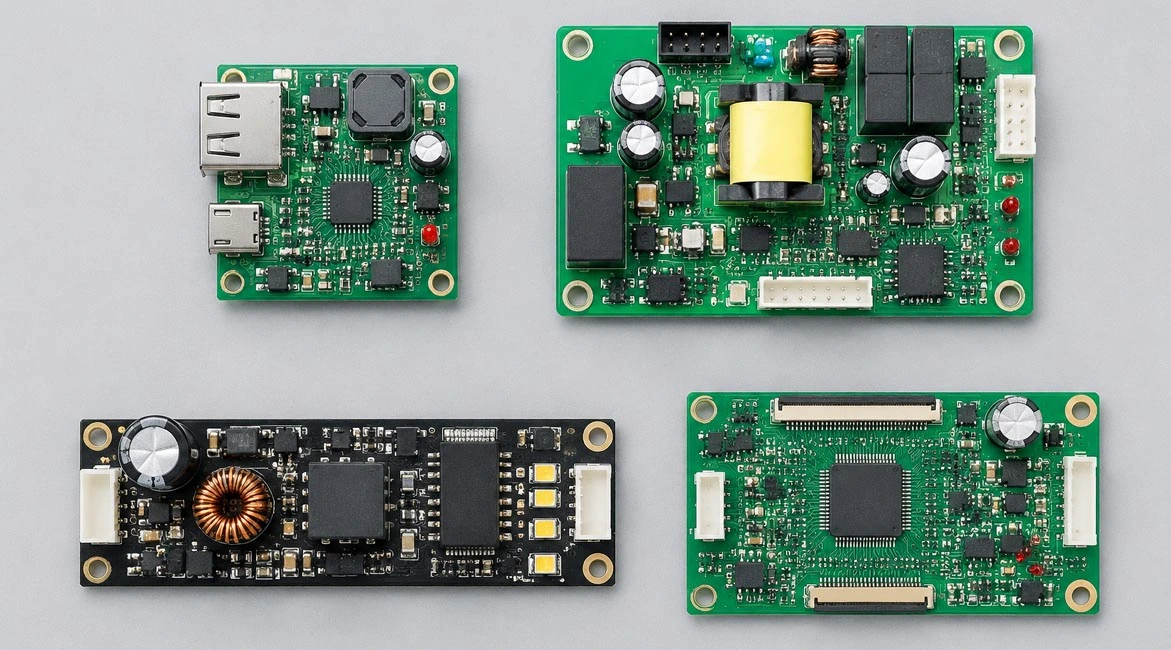
At DAMAVO®, our PCBA manufacturing applications cover different electronic products, including:
- USB charger and power supply assemblies
- Power control panel circuit boards
- LED lighting control boards
- Display and electronic control modules
For example, a USB charger PCBA project may involve component placement inspection, visible soldering checks, NG board rework and post-rework verification.
The specific inspection plan depends on the PCB design, component structure, application environment, production volume and customer requirements.
You can explore our PCBA manufacturing services to learn more about our electronic assembly capabilities.
8. What OEM Buyers Should Check When Choosing a PCBA Supplier
Choosing a PCBA manufacturer involves more than comparing unit prices and delivery schedules. Buyers should also understand how the supplier manages inspection, defects and production quality.
Here are six practical questions to consider:
- Inspection equipment: Does the manufacturer use AOI, SPI and other suitable inspection methods?
- NG handling: How are boards with inspection failures identified, reviewed and reworked?
- Program validation: How are AOI inspection programs verified before production?
- False-call control: Does the manufacturer monitor overkill and potential missed defects?
- Quality records: Can the supplier provide relevant inspection and rework records?
- Application experience: Does the manufacturer understand the requirements of your vehicle, marine or industrial electronic products?
These questions help OEM buyers evaluate whether a PCBA supplier has the production and quality management capabilities needed for long-term cooperation.
9. Frequently Asked Questions About AI-Assisted AOI Inspection
Q1: Does AI-AOI replace manual inspection?
A1: No. AI-AOI supports automated inspection decisions, but operators and engineers remain responsible for rework, program verification and exception handling. Electrical and functional testing also remain separate steps where required.
Q2: What defects can AI-assisted AOI detect?
A2: It can support the identification of visible assembly issues such as missing components, placement offset, incorrect polarity, solder bridging and certain soldering abnormalities. Detection capability depends on the equipment and inspection program.
Q3: What is the difference between SPI and AOI?
A3: SPI checks solder paste after printing and before component placement. AOI checks visible assembly features, typically after reflow soldering.
Q4: Can AI-AOI guarantee zero PCBA defects?
A4: No. AI-assisted AOI is one part of a broader PCBA quality control system. Product quality also depends on PCB design, component quality, assembly processes, inspection verification and electrical or functional testing.
Q5: Can AOI inspection requirements be customized for OEM projects?
A5: Yes. Inspection requirements can be discussed during project evaluation, taking into account PCB complexity, component types, production volume and application-specific quality requirements.
Q6: What information is needed for a PCBA manufacturing quotation?
A6: A BOM, Gerber files, assembly drawings, estimated order quantity and testing requirements help engineers evaluate the project and prepare a suitable quotation.
10. Looking for a Reliable PCBA Manufacturing Partner?
DAMAVO® provides power and lighting solutions with OEM/ODM customization support for vehicle, marine and industrial applications.
With our SMT manufacturing capabilities, AOI inspection process and experience in electronic product development, we support customized PCBA projects across different applications.
Whether you need a USB charger assembly, a customized control panel or an LED lighting circuit board, our team can review your requirements and discuss suitable manufacturing solutions.
Share your Gerber files, BOM, assembly drawings and testing requirements with us to start your project evaluation.


